
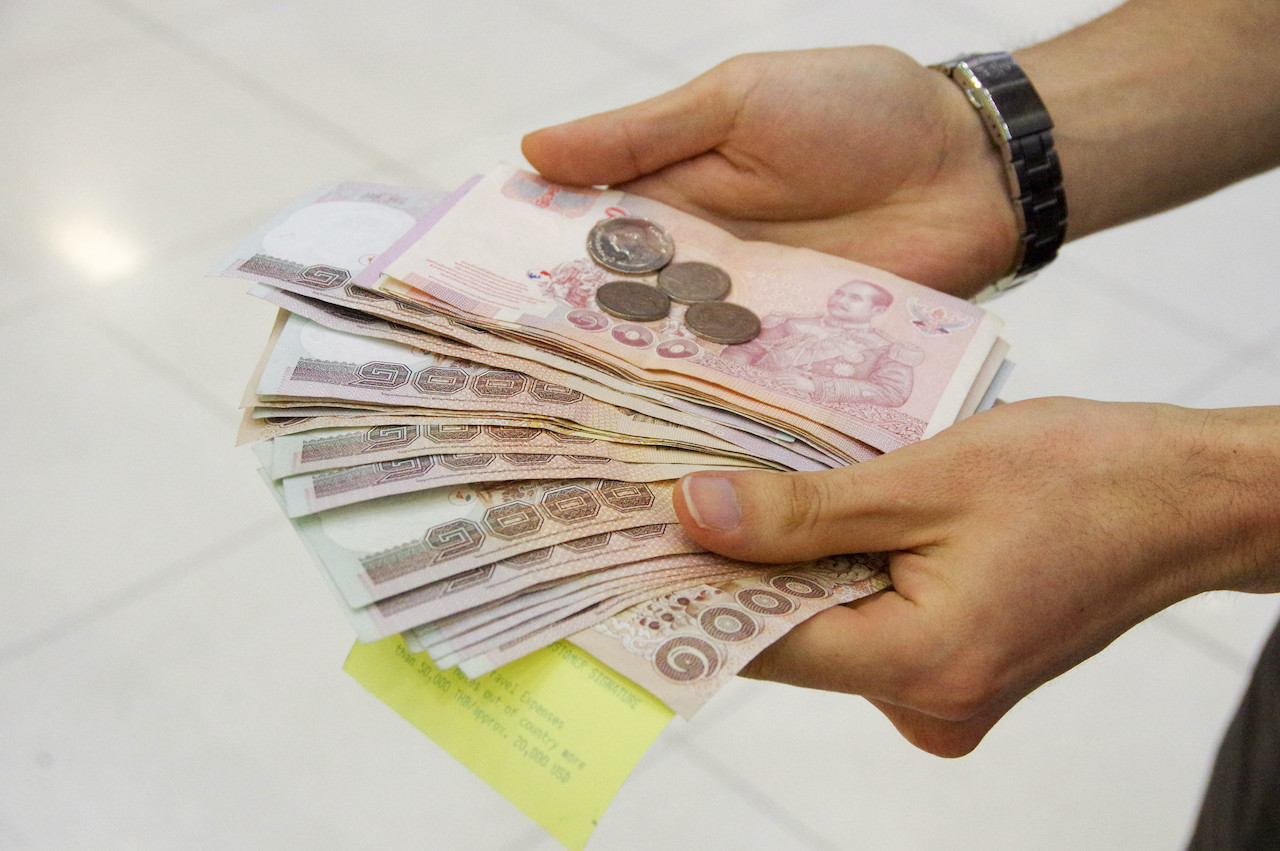
Baht Weakens Again Amid Rising Middle East Conflict and US Dollar Surge
BANGKOK, Thailand — The Thai baht is projected to continue its downward trajectory against the US dollar this week, having recently touched a nearly 15-month low. The currency’s depreciation is being driven primarily by escalating geopolitical risks in the Middle East, surging global oil prices, and a resurgent US dollar.
Thai Tourism Sector Could Lose 15-17% of Revenue If Baht Strengthens Beyond 30 Per US Dolla
Market analysts at Krungthai Global Markets indicate that the baht will remain under significant depreciation pressure in the near term. Following a drop to a 14.5-month low of 33.64 baht per dollar last week, the currency is forecast to test the key resistance range of 33.75 to 33.80 baht per dollar, with the potential to weaken further to between 34.00 and 34.40 baht per dollar in the coming days. This movement aligns with broader global market shifts, including a sharp decline in global gold prices to below 4,000 US dollars per ounce and a rally in crude oil prices fueled by concerns that the ongoing conflict between the US and Iran, which has seen continued clashes since mid-July, could become increasingly prolonged.
Strategists emphasize that the baht is likely to remain highly volatile as investors navigate the compounding effects of regional geopolitical tensions and shifting expectations surrounding the US Federal Reserve’s monetary policy. While a potential easing of Middle East tensions or a scaling back of expectations for further US interest rate hikes could trigger a temporary rebound, analysts caution that any appreciation would likely be capped around the 33.40 to 33.50 baht per dollar mark, with stronger structural support sitting at 33.00. In light of this volatility, financial experts are strongly advising businesses and investors to implement comprehensive hedging strategies, including the use of options, to effectively mitigate foreign exchange risks.
Similarly, Krungsri Global Markets anticipates the baht will trade within a range of 33.30 to 34.00 baht per dollar this week, noting that the fresh rally in global energy markets remains the primary catalyst for the currency’s weakness. This depreciation occurs against a complex macroeconomic backdrop; the US dollar had briefly weakened against most major currencies, with the notable exception of the Japanese yen, following the release of softer-than-expected US inflation data for June, which showed headline and core inflation easing to 3.5 percent and 2.6 percent, respectively.
In response to the market turbulence, the Bank of Thailand has affirmed its vigilant stance. Governor Vitai Ratanakorn stated that the central bank is closely monitoring the renewed escalation of tensions in the Middle East and stands ready to intervene to manage baht movements in alignment with Thailand’s underlying economic fundamentals. The Governor noted that while the current weaker currency has provided a supportive tailwind for the nation’s export and tourism sectors, a protracted conflict in the Middle East poses a significant risk by potentially driving up inflation expectations and dampening the country’s overall economic growth outlook.
Bank of Thailand to Limit Online Gold Trading to Ease Baht Pressure
As global markets brace for further developments in the Middle East and await clearer signals on US monetary policy, the Thai baht is expected to remain sensitive to external shocks.
-Thailand News (TN)